Stage 1: Introduction of Bill
A bill is proposed in either the House or the Senate by a lawmaker.
↓
Understanding how Congress operates is essential for engaging with our democracy. With its complexities, it’s easy to feel intimidated by the legislative process. But by breaking down the structure and functions of Congress, you'll not only grasp its significance but also see how you can influence it as a citizen.
Below is a visual representation of how a bill progresses through the U.S. Congress to become a law, highlighting the key stages and chambers involved. For a deeper understanding of legislative processes, explore how the federal budget process works, which is another critical function of Congress.
A bill is proposed in either the House or the Senate by a lawmaker.
Bill goes to relevant committee for detailed examination, hearings, and amendments.
Bill is debated and voted on in the chamber (House or Senate) where it originated.
If passed, the bill moves to the other chamber for consideration (e.g., House to Senate).
If differences exist, a Conference Committee resolves them to create a single bill.
President signs bill into law, or vetoes it (can be overridden by Congress).
When we think about the U.S. Congress, it can sometimes feel like trying to decipher an intricate puzzle. But don't worry! I'm here to break it down for you in a way that's easy to grasp. Think of Congress as the heart of our government, where laws are crafted and decisions that impact our daily lives are made. Let's dive into how this important institution is structured and operates.
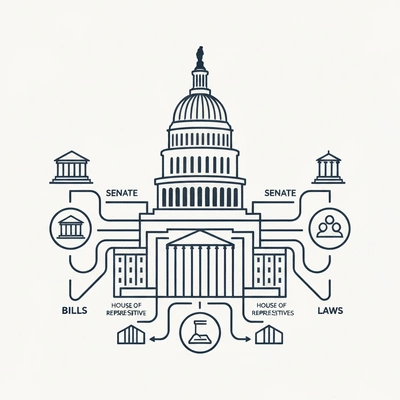
At its core, the U.S. Congress is a bicameral legislature, which means it has two chambers: the House of Representatives and the Senate. This structure allows for a balance of representation and ensures that different voices are heard in the legislative process. It’s like having two teams working together to shape the rules of the game for everyone!
The bicameral system was established in the Constitution, and it provides a unique way for laws to be debated and enacted. Each chamber has its own distinct responsibilities and powers, ensuring a thorough review of proposed legislation. This system is designed to promote checks and balances within our government.
The House of Representatives is made up of 435 members, each representing a congressional district. They serve two-year terms, which keeps them closely connected to their constituents’ needs. The House tends to focus on issues that require more immediate public attention, much like a fast-paced news cycle!
In contrast, the Senate is composed of 100 members, with each state having two Senators regardless of its size. This setup ensures that every state has equal representation in this chamber. Senators serve six-year terms, which allows them to focus on long-term policies rather than just short-term issues. To better understand the responsibilities of these elected officials, you can explore the roles of a U.S. Senator in American democracy.
Understanding how representation functions in Congress is important for grasping the broader political landscape. From the number of Senators and Representatives to the role of non-voting delegates, each aspect contributes to the overall effectiveness of our legislative body.
As mentioned earlier, the House of Representatives has 435 members, while the Senate is made up of 100 Senators. This arrangement means that while the House can rapidly respond to public opinion, the Senate provides a more deliberate approach to legislation. It's like having a sprinter and a marathoner on the same team—each has their strengths!
Interestingly, some territories, such as Puerto Rico and Washington D.C., have non-voting delegates in the House. These delegates can participate in debates and serve on committees but cannot vote on the final passage of legislation. This system highlights the ongoing discussions about representation and rights for residents of U.S. territories.
Members of Congress engage in constituency services to help their districts. This can involve anything from assisting with federal agency issues to hosting town hall meetings. By fostering these connections, representatives can better understand the needs of their constituents, which ultimately shapes their legislative actions.
The journey of a bill is one of Congress's most fascinating aspects. It’s not just a straightforward path; there are several steps involved before a bill can become law. Let’s explore this process together!
The legislative process begins when a bill is introduced in either the House or the Senate. Lawmakers propose ideas based on the needs of their constituents or national priorities. This introduction is crucial, as it sets the stage for all subsequent discussions!
Once a bill is introduced, it goes to a committee for review. Committees play an essential role in examining the details of the bill, holding hearings, and gathering expert testimony. This stage is where the bill can be refined and shaped into something more effective.
After committee review, the bill is brought to the floor of the chamber for debate and voting. Here, every member has an opportunity to voice their opinions and suggest changes. A major aspect of this step is achieving a majority vote to pass the bill.
Once a bill passes one chamber, it moves to the other for consideration. This crossover allows for further scrutiny and debate. If the second chamber makes amendments, the bill must return to the original chamber for approval.
The final stage involves a conference committee if there are differences in the versions passed by both chambers. The committee's goal is to reconcile these differences into a single bill before sending it to the President for approval. This collaborative process ensures that both chambers have a say in the final outcome!
Amendments are critical during the legislative process, allowing lawmakers to modify a bill in response to feedback and changing circumstances. This flexibility often leads to more effective legislation that better serves the public.
Committees are the backbone of Congress, playing a vital role in shaping legislation and oversight. Without them, the legislative process would be chaotic and less efficient. Let's examine the different types of committees and their significance.
There are several types of committees in Congress, each serving a unique purpose:
Committee chairs wield considerable power in determining which bills get discussed and how they are modified. Their leadership directly influences the legislative agenda and can make or break a proposed law.
Congressional hearings are an important aspect of the legislative process, allowing for public input and expert testimony. These hearings help to inform committee members about the implications of legislation, ensuring that all perspectives are considered before a vote.
Congress is not just about making laws; it has a range of powers and responsibilities that ensure accountability and governance. Understanding these functions can enhance our appreciation of how Congress operates.
Lawmaking involves careful consideration of proposals, amendments, and public input. It's a dynamic process that reflects the needs and priorities of the American people. Through this process, Congress plays a crucial role in shaping the nation's future.
Another vital responsibility of Congress is oversight. Through hearings and investigations, Congress can hold the executive branch accountable, ensuring that laws are implemented effectively and ethically. This oversight function is a cornerstone of our democracy!
The Congressional Budget Office (CBO) provides essential data and analysis on budgetary matters. This agency helps Congress make informed decisions about spending, ensuring that fiscal policies are sustainable and beneficial for the economy.
There are many misconceptions about Congress that can cloud our understanding of its functions. Let's clarify some of these common misunderstandings!
The filibuster often gets a bad rap! It's a tactic used in the Senate to prolong debate and delay voting on a bill. On the other hand, a presidential veto allows the President to reject legislation, but Congress can override this veto with a two-thirds majority vote.
Many people confuse our Congressional system with parliamentary systems found in other countries. In the U.S., the executive branch is separate from the legislative branch, whereas, in parliamentary systems, they are intertwined, leading to different political dynamics.
Partisan politics can significantly affect how legislation is crafted and debated. Understanding these dynamics is crucial for making sense of current events and how they impact our lives. It can be frustrating, but recognizing these patterns can empower us as voters!
To truly understand the legislative process, it can be helpful to visualize the journey a bill takes from idea to law. Let’s take a look at how this process unfolds!
A flowchart can simplify complex processes, making it easier to understand how a bill moves through Congress. Visual aids like this can be highly beneficial for visual learners who want to grasp the nuances of legislative action.
Looking at a real-world example of a bill can illuminate the complexities of the legislative process. By dissecting the journey of a recent bill, we can better appreciate the effort and collaboration involved in shaping our laws.
Did you know? Engaging directly with your congressional representatives can make a significant impact on legislation. Whether through emails, calls, or town hall meetings, expressing your views helps ensure that your concerns are addressed. Don’t underestimate the power of a well-articulated message!
As we explore the role of Congress in American governance, it’s important to recognize the challenges it faces today. When we think about the functions of Congress, we often picture a well-oiled machine working to create laws and represent the people. However, the reality is more complex, particularly in an era characterized by partisan control and external influences.
The ongoing challenges Congress faces can impact its ability to govern effectively. In this section, we’ll delve into how these issues shape the legislative landscape and ultimately affect our daily lives.
One of the most pressing concerns is the impact of partisan control on Congress's functionality. When one party holds a significant majority, it can lead to gridlock, where critical legislation stalls due to opposing views. As a result, many essential policies that benefit citizens may be delayed or entirely abandoned.
Another significant factor to consider is the influence of special interests and lobbying on legislation. While lobbying is a part of the political process, its impact can sometimes overshadow the voices of everyday citizens. Lobbyists advocating for specific industries or interests can sway legislative priorities, leading to concerns about representation and accountability.
The consequences of partisan control extend beyond just the legislative process. With a lack of bipartisan cooperation, the ability to address pressing national issues, such as healthcare, education, and infrastructure, can be severely hindered. When we see Congress struggling to pass vital legislation, we must remember the underlying dynamics at play.
Special interests often wield considerable influence over lawmakers, resulting in legislation that may not always align with the public good. This can lead to legislation that favors specific industries at the expense of broader community interests. Understanding this dynamic is crucial for citizens who want to engage meaningfully with Congress.
Here are some common questions about the structure, functions, and processes of the U.S. Congress, based on the information discussed in this article.
Your involvement is crucial for a functioning democracy! Engaging with Congress not only empowers you as a citizen but also encourages a healthier political environment. Let's discuss how you can stay informed about legislative developments and get involved.
In today’s fast-paced world, keeping up with Congress can feel overwhelming. But it doesn’t have to be! Here are some effective ways to stay informed:
Remember, informed citizens are engaged citizens! By actively seeking out information, you can better understand the legislative process and advocate for issues that matter to you. For more insights into how to prepare for key political events, consider researching candidates before you vote.
Engaging with your local community and representatives is essential to making your voice heard. Whether through attending town hall meetings or participating in community discussions, every effort counts!
Engagement with constituents is a fundamental aspect of Congress's responsibility. When elected officials hear from their constituents about local issues, they can better tailor their legislative efforts to meet the needs of the community. I often emphasize the importance of not only voting but also communicating with your representatives about what matters to you. Your insights can help shape legislation and drive change!
Here is a quick recap of the important points discussed in the article:

Jordan McClure is a civic education writer and political researcher focused on helping readers better understand elections, candidates, government systems, and public policy. Through clear and balanced explanations, Jordan breaks down complex political topics into practical information that everyday readers can understand. His work emphasizes clarity, factual accuracy, and context over opinion, helping citizens stay informed and navigate political topics with confidence.