House and Senate: Key Differences

Did you know that the U.S. Congress, made up of the House of Representatives and the Senate, operates on distinct principles that shape the laws affecting millions of citizens? Understanding these differences not only enhances your civic knowledge but empowers your engagement in democracy.
What You Will Learn
- The House of Representatives consists of 435 members elected for two-year terms, focusing on immediate concerns of their districts.
- The Senate has 100 members serving six-year terms, allowing for a broader, long-term perspective on national issues.
- Revenue bills must originate in the House, highlighting its pivotal role in financial matters, while the Senate confirms presidential appointments and ratifies treaties.
- The legislative process requires cooperation between both chambers, ensuring checks and balances are maintained within the U.S. government.
House vs. Senate: A Comparative Overview
Delve into the structural and functional differences between the House of Representatives and the Senate, highlighting their distinct roles in the U.S. legislative process. For a deeper understanding of how laws are created, explore inside the legislative process.
House of Representatives
- Members: 435
- Term: 2 Years
- Representation: Population-based
- Key Power: Initiates revenue bills
U.S. Senate
- Members: 100
- Term: 6 Years
- Representation: Equal per state
- Key Power: Confirms appointments & treaties
Understanding the Fundamental Differences Between the House and Senate
When it comes to grasping the U.S. government, understanding the fundamental differences between the House of Representatives and the Senate is crucial. These two chambers make up Congress, which is the legislative branch responsible for making laws. Each chamber has its own unique structure, roles, and responsibilities, contributing to the balance of power in our democracy.

At Next In Office, we aim to simplify these complex political structures so that you can feel more informed and engaged. By breaking down the roles of the House and Senate, we hope to empower you to navigate the political landscape with confidence!
What is the Structure of Congress?
The legislative branch of the U.S. government consists of two chambers: the House of Representatives and the Senate. Together, they work to draft, debate, and pass legislation that affects the entire nation. The House is designed for more direct representation, while the Senate serves as a deliberative body that ensures broader state interests are considered.
- House of Representatives: Comprised of 435 members, serving districts based on population.
- U.S. Senate: Consists of 100 members, with each state represented by two senators.
This dual structure allows for a balance between populous areas and less populated states, ensuring that every voice is heard in the legislative process.
Comparing Membership in the House vs Senate
How Many Members Are in Each Chamber?
As mentioned earlier, the House of Representatives has a total of 435 members. This large number reflects the population distribution across the U.S. In contrast, the Senate is composed of 100 members, with each state contributing two senators, no matter its population.
This disparity in numbers highlights how each chamber approaches representation differently. The House, with its population-based approach, focuses on the immediate needs of districts, while the Senate brings a broader perspective that considers the interests of entire states. If you're interested in understanding the specific duties of members of the upper chamber, you can learn more about understanding a senator's role.
Representation: Population vs Equal State Representation
In the House, representation is directly linked to population. This means that larger states have more representatives, allowing them to have a louder voice in Congress. Conversely, the Senate operates on a principle of equal representation, ensuring that each state has the same number of senators, which protects the rights of smaller states.
- House: Representation based on population size.
- Senate: Equal representation for all states, regardless of size.
This unique setup creates a balance between the needs of the population and the interests of individual states, which is essential for maintaining a fair and functional legislative process.
Term Lengths and Eligibility Requirements for Office
House of Representatives: Two-Year Terms
Members of the House of Representatives serve two-year terms. This shorter term encourages them to stay closely connected with their constituents' needs and opinions. To be eligible for election, one must be at least 25 years old, a U.S. citizen, and have lived in the state they represent for at least seven years.
This structure ensures that House members are responsive to the changing needs and desires of the electorate, as they must consistently seek re-election every two years!
U.S. Senate: Six-Year Terms
In contrast, U.S. Senators serve six-year terms. This longer tenure allows senators to take a more long-term perspective on national issues. To qualify for the Senate, candidates must be at least 30 years old, a U.S. citizen, and have resided in the state they represent for at least nine years.
The extended term length encourages senators to focus on broader policy matters, contributing to a more stable legislative process.
Legislative Powers: Who Does What?
Revenue Bills: The House's Exclusive Role
One significant power of the House of Representatives is its exclusive role in initiating revenue bills. According to the Constitution, all bills related to taxation and government spending must originate in the House. This power makes the House a pivotal player in financial matters and directly links it to the taxpayers.
Senate's Role in Confirmations and Treaties
The Senate holds the responsibility for confirming presidential appointments and ratifying treaties. This role is crucial in maintaining a system of checks and balances, ensuring that the executive branch does not hold too much power. The Senate's ability to provide advice and consent on these matters underscores its importance in the governance process.
Legislative Process: How a Bill Becomes Law
Step-by-Step Flow of Legislation
The path a bill takes to become law involves several steps through both chambers. Typically, a bill is introduced, debated, and amended in committees before being voted on by the full chamber. If a bill passes one chamber, it then moves to the other chamber for consideration.
- Introduction of a bill
- Committee review and amendments
- Full chamber debate and vote
- Repeat in the other chamber
- Presidential approval or veto
This process highlights the importance of both the House and Senate in shaping legislation, ensuring that multiple viewpoints are considered before a bill becomes law.
Key Congressional Committees: Their Influence on Legislation
Committees play a critical role in the legislative process by examining bills, conducting hearings, and making recommendations. Notable committees include the House Appropriations Committee, which is responsible for allocating funding, and the Senate Judiciary Committee, which oversees judicial nominations and significant legal matters.
These committees are essential for the efficient functioning of Congress, allowing for detailed discussion and expert input on various topics!
Debate Styles: House vs Senate
The debate styles in the House and Senate differ significantly. The House has strict rules governing debate time, making discussions more structured and fast-paced. On the other hand, the Senate allows for extended debate, often leading to filibusters and more in-depth discussions on issues.
- House: Limited debate time, more structured.
- Senate: Extended debate, allows for filibusters.
This contrast reflects the different philosophies and functions of each chamber, impacting how legislation is discussed and ultimately passed.
Why Both Chambers Matter: The Importance of Checks and Balances
Foundational Principles of the U.S. Government
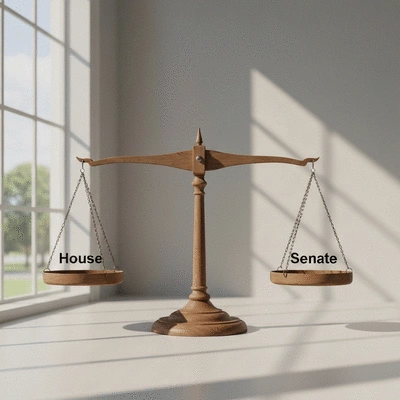
Both the House and Senate contribute to the foundational principles of checks and balances integral to the U.S. government. By having two separate chambers with distinct powers and responsibilities, we prevent any one group from having too much control. This structure is vital for maintaining democracy and protecting individual rights.
Modern Examples of Legislative Power Dynamics
Recent legislation showcases how the balance of power between the chambers plays out in practice. For instance, during significant debates on healthcare and economic policy, we often see negotiations between the House and Senate reflecting their different priorities and perspectives. Understanding these dynamics helps us appreciate how our government operates! For more insights into how fiscal decisions are made, explore understanding fiscal policy basics.
Common Questions About the House and Senate
What are the Main Differences Between House and Senate Members?
One common question I receive is about the key differences between House and Senate members. While both are crucial to our legislative process, they have distinct roles, powers, and relationships with their constituents. The House focuses on local issues, while the Senate addresses broader state and national concerns.
Which Chamber Holds More Power?
Another frequent inquiry is regarding which chamber holds more power. While perception may vary, both the House and Senate have unique authorities that balance each other out. For example, the House controls revenue bills, while the Senate has significant influence over appointments and treaties.
Understanding Leadership Roles: Speaker of the House and Senate Leaders
Leadership roles such as the Speaker of the House and Senate Majority Leader are pivotal in guiding the legislative agenda. The Speaker oversees House operations and represents the majority party, while the Senate Majority Leader coordinates Senate activities and ensures party alignment.
The Role of Political Parties in Congress
The influence of political parties also plays a significant role in shaping congressional operations. Party leadership, caucuses, and voting blocks can impact how legislation is approached and passed, making party dynamics an essential aspect of understanding Congress.
Interactive Poll: Your Thoughts on Representation
As we dive deeper into the differences between the House and Senate, we want to hear from you! Which aspect of representation do you find most important when it comes to your elected officials?
Summarizing the Key Differences and Their Impact
Understanding the distinctions between the House of Representatives and the Senate is vital for grasping how our government operates. Each chamber has its unique functions, powers, and roles that shape U.S. legislation. In this section, we’ll recap these essential differences and their implications for governance.
The House, with its larger membership and shorter terms, focuses on immediate concerns, while the Senate, with its longer terms and fewer members, emphasizes stability and thorough debate. Recognizing these differences helps us appreciate how laws are crafted and refined before they reach the President's desk.
Visual Comparison for Quick Reference
To make the differences even clearer, let’s look at a comparison table that highlights the key features of the House and Senate:
| Aspect | House of Representatives | Senate |
|---|---|---|
| Membership | 435 Representatives | 100 Senators |
| Term Length | 2 Years | 6 Years |
| Representation Type | Population-based | Equal state representation |
| Revenue Bills | Initiates all revenue bills | No exclusive role |
| Confirmation Power | None | Confirms presidential appointments and treaties |
This table serves as a quick reference, helping you to visually compare the two chambers and better understand their respective roles in the legislative process.
Engaging the Reader: Why Understanding the House vs Senate Matters
Understanding the complexities of the House and Senate isn’t just for political junkies; it’s important for all citizens. By knowing how these two chambers function, you can better appreciate the legislative process and your role in it. For instance, when you vote, you're not just selecting a candidate; you're influencing the balance of power in Congress!
- Awareness of Representation: Knowing who represents your interests can empower you to engage more effectively with your elected officials.
- Informed Voting: Understanding the differences can help you make informed choices during elections, especially when it comes to legislative priorities.
- Advocacy for Change: If you wish to advocate for specific policies, knowing which chamber addresses your concerns can enhance your efforts.
At Next In Office, we believe that an informed citizenry is crucial for a healthy democracy. The more you know, the better you can navigate the political landscape!
FAQs: Common Queries About Congressional Operations
As we wrap up this section, let’s address some common questions about how Congress works:
- What is the primary function of Congress? Congress is responsible for making laws, representing the people, and overseeing the executive branch.
- How do members vote on legislation? Votes can be done in various ways, including voice votes, roll call votes, and recorded votes, depending on the chamber and circumstances.
- What role do constituents play in Congress? Constituents—citizens living in a representative's district—can influence legislation through communication, advocacy, and voting.
- What are the main differences in leadership between the House and Senate? The House is led by the Speaker of the House, who has significant power over the legislative agenda. The Senate is led by the Vice President (as President of the Senate) and the Senate Majority Leader, who holds significant influence over legislative proceedings.
- How do checks and balances function between the House and Senate? Both chambers must agree on a bill for it to become law, ensuring that legislation is thoroughly vetted. The House initiates revenue bills, while the Senate confirms appointments and treaties, providing distinct checks on executive power and each other.
Your questions about Congress matter! By seeking answers, you're taking an active role in understanding how government functions, which is essential for civic engagement.
Next Steps and Further Exploration
Now that you have a clearer understanding of the House and Senate, I encourage you to dive deeper into civics education. There’s so much more to learn about how our government operates and the processes that shape the laws that affect our daily lives.
For further exploration, check out our related articles on legislative processes and civic resources at Next In Office. Together, we can foster a well-informed electorate that actively participates in democracy! To begin your journey, learn about registering to vote and ensure your voice is heard.
Recap of Key Points
Here is a quick recap of the important points discussed in the article:
- The U.S. Congress consists of two chambers: the House of Representatives and the Senate, each with distinct roles.
- The House has 435 members, with representation based on population, while the Senate has 100 members with equal representation from each state.
- House members serve two-year terms, focusing on immediate needs, whereas senators serve six-year terms for a long-term perspective.
- The House exclusively initiates revenue bills, while the Senate confirms presidential appointments and ratifies treaties.
- The legislative process involves several steps, including committee review and debate in both chambers before a bill becomes law.
- Understanding the distinctions between the House and Senate is crucial for informed civic engagement and voting.

Jordan McClure
Jordan McClure is a civic education writer and political researcher focused on helping readers better understand elections, candidates, government systems, and public policy. Through clear and balanced explanations, Jordan breaks down complex political topics into practical information that everyday readers can understand. His work emphasizes clarity, factual accuracy, and context over opinion, helping citizens stay informed and navigate political topics with confidence.