Stage 1
Introduction
Action: A bill is formally introduced in either the House (H.R.) or Senate (S.).
Significance: Marks the official start of the legislative process.

What if you could navigate the complex world of legislation with confidence? Understanding the federal legislative process is essential for every citizen aiming to engage with democracy effectively. By demystifying how a bill becomes law, you empower yourself to participate meaningfully in political discussions.
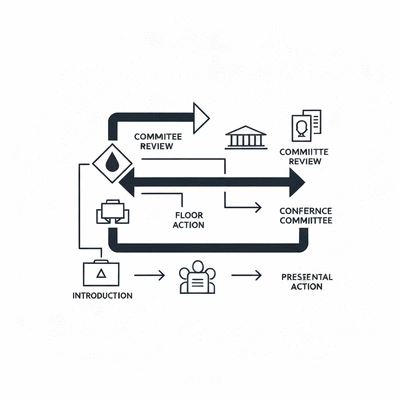
The legislative process is a multi-stage journey, ensuring thorough review and collaboration before a bill becomes federal law. This visual outlines the key phases and the critical actions taken at each step. To learn more about the intricacies of this journey, consider exploring resources on inside the legislative process.
Action: A bill is formally introduced in either the House (H.R.) or Senate (S.).
Significance: Marks the official start of the legislative process.
Action: Bill referred to specialized committees for detailed examination, debate, and potential amendments. Hearings are held.
Significance: Critical for shaping the bill; can determine if it moves forward or dies.
Action: Full chamber debates and votes on the bill. Amendments can be proposed and voted upon.
Significance: Bill must pass both the House and Senate in identical form to proceed.
Action: If House and Senate versions differ, a joint committee reconciles discrepancies.
Significance: Ensures a single, unified bill is sent for presidential approval.
Action: President can sign into law, veto, or allow it to become law without signature.
Significance: Final step for a bill to officially become federal law.
Understanding how a bill becomes federal law can feel like a maze. But if we break it down, we can see the clear stages that shape the journey from idea to legislation. Each phase is vital, ensuring that every voice is heard and that the law is carefully crafted. So, let's dive into this process!
The pathway for a bill is marked by several critical stages, each with its own significance. Here’s an outline of the key stages that a bill navigates:
Each of these steps plays a crucial role in ensuring that legislation is thoughtfully considered before becoming law. From the initial spark of an idea to the final approval, the process emphasizes the importance of collaboration and scrutiny.
When a bill is introduced in Congress, it can take one of two forms: as a House bill (H.R.) or a Senate bill (S.). This distinction is important, as it determines where the bill will begin its journey. After introduction, the bill is swiftly referred to a committee that specializes in the relevant area, such as finance or education.
This initial referral is critical because it sets the stage for the bill’s fate. Committees have the power to shape the bill, suggest amendments, or even decide if it will move forward or die quietly. Understanding these dynamics is key to comprehending the key differences between the House and Senate.
Advocacy groups play a vital role in influencing the legislative process. These organizations work tirelessly to lobby lawmakers, share their perspectives, and rally public support for specific issues. Their efforts can significantly impact bill outcomes.
By amplifying voices and providing critical information, advocacy groups help ensure that diverse opinions are considered during the legislative process. This engagement is a cornerstone of our democracy, reminding us that every citizen can make a difference.

Now that we’ve set the stage, let’s explore the committee process in more detail.
Did you know? Engaging with your local representatives can have a significant impact on the legislative process. Don’t hesitate to reach out with your views on bills that matter to you. Personal stories and feedback can influence their decisions and bring attention to the issues you care about!
Understanding how a bill becomes federal law is vital for every citizen. The legislative process involves several essential stages that highlight the collaborative nature of Congress and the President. From the bill's introduction to the final presidential action, each phase plays a significant role in shaping the laws that govern our society.
Here are the key stages to remember:
Each step reflects the importance of compromise and negotiation, showcasing how our democracy functions. By understanding this process, you empower yourself as an informed citizen who can engage meaningfully with political discussions, much like when understanding US election processes.
The main stages include Introduction, Committee Review, Floor Action, Conference Committee (if necessary), and Presidential Action.
Committees are crucial for detailed examination, debate, and amendment of bills. They can significantly shape a bill's content and determine whether it moves forward or dies.
Yes, advocacy groups play a vital role by lobbying lawmakers, mobilizing public support, and providing information to influence legislative outcomes.
If the House and Senate pass different versions, a Conference Committee is formed to reconcile the discrepancies and create a single, unified bill.
The President can sign the bill into law, veto it (which Congress can override with a two-thirds vote in both chambers), or allow it to become law without a signature by taking no action within a specific timeframe.
At Next In Office, we believe that being informed is the first step toward active participation in our democracy! Engaging with the legislative process is vital, and there are many ways you can do this. Start by advocating for issues you care about and pay close attention to the bills being discussed in Congress.
By keeping yourself informed and participating in the conversation, you contribute to a more engaged and educated electorate. Remember, every voice counts, and together we can help shape the future of our laws and policies!
Here is a quick recap of the important points discussed in the article:

Jordan McClure is a civic education writer and political researcher focused on helping readers better understand elections, candidates, government systems, and public policy. Through clear and balanced explanations, Jordan breaks down complex political topics into practical information that everyday readers can understand. His work emphasizes clarity, factual accuracy, and context over opinion, helping citizens stay informed and navigate political topics with confidence.